| Container: | 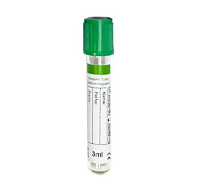 |
| Description: | The D-dimer test is intended for use as an aid in the diagnosis of venous thromboembolism (deep vein thrombosis (DVT) and pulmonary embolism (PE)). |
| Preparation: | DOCUMENTS TO DOWNLOAD You can download the Standard Operating Procedure for this device in HERE Guidance for Managing Patients Using POCT AQT90 D-dimer - HERE |
| Sample requirements: | Whole blood venous samples for D-dimer analysis should be collected into into an evacuated |
| Interference: | Please, refer to Guidance for Managing Patients Using POCT AQT90 D-dimer available to download on "Preparation" section. |
| Important Information: | A D-dimer result below the age-adjusted clinical decision limit can rule-out VTE with >99% negative predictive value. If a POCT result is in doubt, repeat on POCT with a fresh sample. Note that D-dimer may be raised in a number of conditions unrelated to a VTE. |
| Comments: | Use a NICE- aligned pathway , including the use of Wells score for clinical assessment and to determine the need for D-dimer testing. NICE NG158 for DVT (deep vein thrombosis) or PE (pulmonary embolism) or local Trust pathways. D-dimer should not be used in patients with high clinical probability of PE or in isolation for the rule-out of high probability DVT. |
Please, refer to Standard Operating Procedure available to download on "Preparation" section.
